Clyde Peeling’s Reptiland Rebrand
Deliverables:
1 Primary Logo
Brand Guidelines
5 Page Website
3 Signage Boards
2 Enviromentals
2 Exhibit Posters
1 Brochure
2 Merchandise Pieces (Tote Bag & Hat)
4 Sticker Designs
Proposal:
Clyde Peeling’s Reptiland is a long-standing reptile attraction in Allenwood, Pennsylvania, known for its extensive collection of reptiles and commitment to education and conservation. While the institution has strong regional recognition and historical significance, its current visual identity and brand presence do not fully reflect its educational mission, target audience, or appeal to modern audiences.
A refreshed brand identity is needed to present Reptiland as a credible, engaging, and educational destination while maintaining its unique personality and long-standing reputation. The project also highlights the importance of branding in supporting education, conservation, and visitor engagement within nonprofit or educational institutions. This will ensure the development of a modern, cohesive visual identity that reflects Reptilland’s mission and values. As well as improve brand recognition and consistency across physical and digital points.
The primary target audience will be families with children, school groups, educators, and wildlife enthusiasts. Clyde Peeling’s Reptiland appeals to a younger audience because it combines education with excitement, offering immersive, interactive experiences centered around fascinating animals. This balance of fun and learning makes it especially effective at capturing and maintaining the attention of children, teens, and young families.
Research Synopsis:
The rebranding of Clyde Peeling’s Reptiland started with zoo branding strategies that emphasize conservation storytelling, cohesive visual identity, and visitor engagement. Leading institutions such as the San Diego Zoo and Bronx Zoo demonstrate that successful rebrands go beyond aesthetics, as they unify mission, messaging, and experience into one clear system.
Research from the San Diego Zoo highlights the importance of a strong, symbolic logo and cohesive brand architecture. Their identity integrates multiple animal forms into a single mark, representing both heritage and conservation success, while maintaining consistent messaging across all platforms to reinforce their role as a global conservation leader. Additionally, their communication strategy centers on three key ideas: wildlife is at risk, conservation is possible, and visitors can help—creating a clear and emotionally engaging narrative.
Similarly, the Bronx Zoo’s rebrand demonstrates the value of modernizing while preserving authenticity. Their updated identity uses bold colors, striking photography, and concise, memorable messaging to reflect both the diversity of animals and the cultural energy of its location. This approach helped reposition the zoo as a must-visit destination while maintaining its legacy. Their design system also emphasizes animal-inspired color palettes and immersive visuals to create a recognizable and flexible brand across signage, marketing, and exhibits.
Equally important is research on visitor engagement, which shows that interactive, action-focused messaging is more memorable and impactful than passive information. Across the industry, effective zoo branding consistently ties back to a clearly defined mission, using design to enhance both education and emotional connection. Strong brands align visual identity, signage, and messaging to create a seamless visitor journey that reinforces conservation values at every touchpoint.
About the Company:
Clyde Peeling's Reptiland is a specialized zoological park dedicated to the care, exhibition, and conservation of reptiles and amphibians. Founded with a mission to promote understanding and appreciation of often-misunderstood species, Reptiland offers immersive, hands-on experiences that bring visitors face-to-face with animals from around the world.
Through a combination of live shows, interactive exhibits, and educational programming, the organization creates engaging opportunities for guests of all ages to learn about wildlife, ecosystems, and conservation efforts. Mostly centered around an audience of families and wildlife enthusiasts. Reptiland also extends its impact beyond the park through outreach initiatives, delivering live animal presentations to schools, communities, and events. With a strong focus on education, animal care, and public engagement, Reptiland positions itself as both an entertaining destination and a trusted resource for wildlife learning, bridging the gap between curiosity and conservation.
Description:
Rebranding Clyde Peeling's Reptiland offers a chance to modernize its image while staying true to its legacy as a hands-on, conservation-focused reptile destination. The rebrand of Clyde Peeling’s Reptiland transforms a beloved regional attraction into a bold, forward-thinking wildlife experience. With a striking new visual identity and a focus on storytelling, the brand sheds outdated perceptions and embraces a vibrant, adventurous spirit. It celebrates reptiles as powerful, essential creatures while inspiring curiosity, respect, and conservation in every visitor.
Objectives:
To independently research, design, and produce a logo, website, environmental graphics, signage, merchandise, brochure, exhibit posters, and brand guidelines for Clyde Peeling’s Reptiland.
To conduct in-depth research into the organization’s background, educational goals, and audience demographics to guide informed and purposeful design decisions.
To integrate foundational design principles with expanded research into branding strategy, illustration, typography, color usage, and layout across all project components.
To continuously evaluate and refine design work through ongoing self-assessment to elevate the overall standard of the outcomes.
To effectively interpret and incorporate feedback from peers and instructors throughout the design process.
To preserve the essence and mission of Clyde Peeling’s Reptiland while refreshing and strengthening its visual presence.
To deliver a unified and polished rebrand that demonstrates consistency, intentionality, and meticulous attention to detail.
Target Audience:
Clyde Peeling’s Reptiland is a family-owned and small-town zoo attraction, making it feel very personal and loved by many.
The Primary Audience – Families with Children (Ages 4–14)
This is the core audience and the biggest driver of attendance. Parents are looking for fun, educational, and safe day trips, while kids are drawn to excitement and discovery. The rebrand should appeal to a balance of playful visuals and interactive messaging with clear educational value and ease of planning.
Secondary Audience – School & Educators
Reptiland already has strong potential as an educational resource. Teachers, field trip coordinators, and schools value structured learning experiences tied to science curricula. Messaging here should emphasize hands-on learning, conservation education, and accessible programming.
Tertiary Audience – Young Adults & Wildlife Lovers
Teens, college students, and young adults are drawn to unique, shareable experiences. A modern, visually bold brand—along with immersive exhibits and striking visuals can position Reptiland as an unexpected, “cool” destination worth visiting and posting about.
Process Narrative:
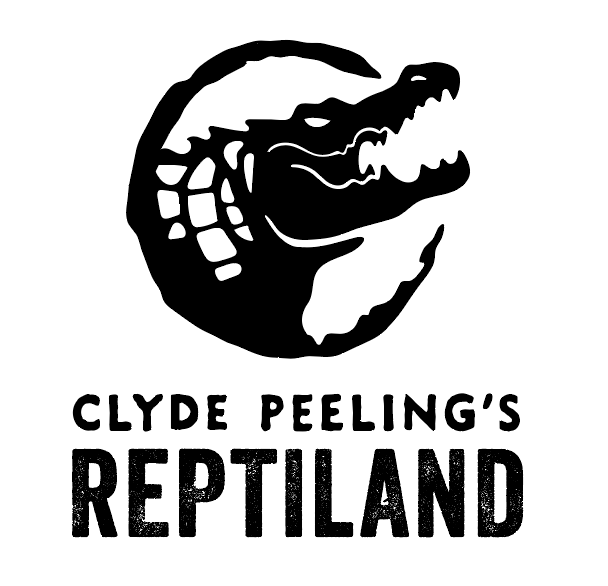
The rebrand of Reptiland started with sketching ideas down on paper and transferring them quickly to Adobe Illustrator for easier scaling and manipulation of elements. As a reptile owner and local of the area, Reptiland was in my key interest to work on as I took multiple inspirations from other bigger, successful zoos like San Diego & Bronx. I wanted to make Reptiland pop out more, as they lack a well-defined branding strategy. I ended up focusing on their main attractions for the logo, including dinosaurs, alligators, and even some lizards, which eventually got narrowed down. I pushed for the design to be focused on adventurous yet playful, with the final design of the logo of the alligator.
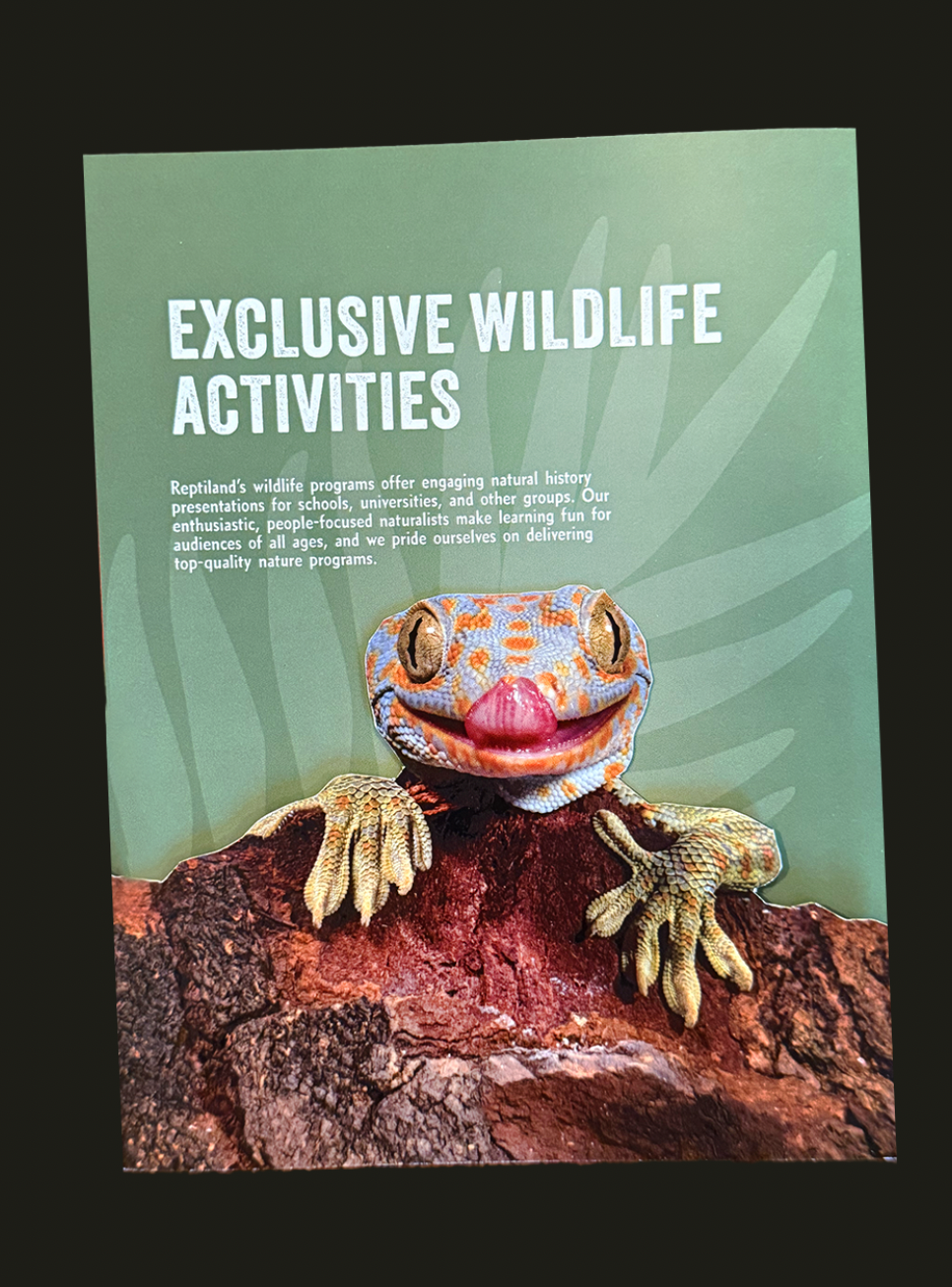
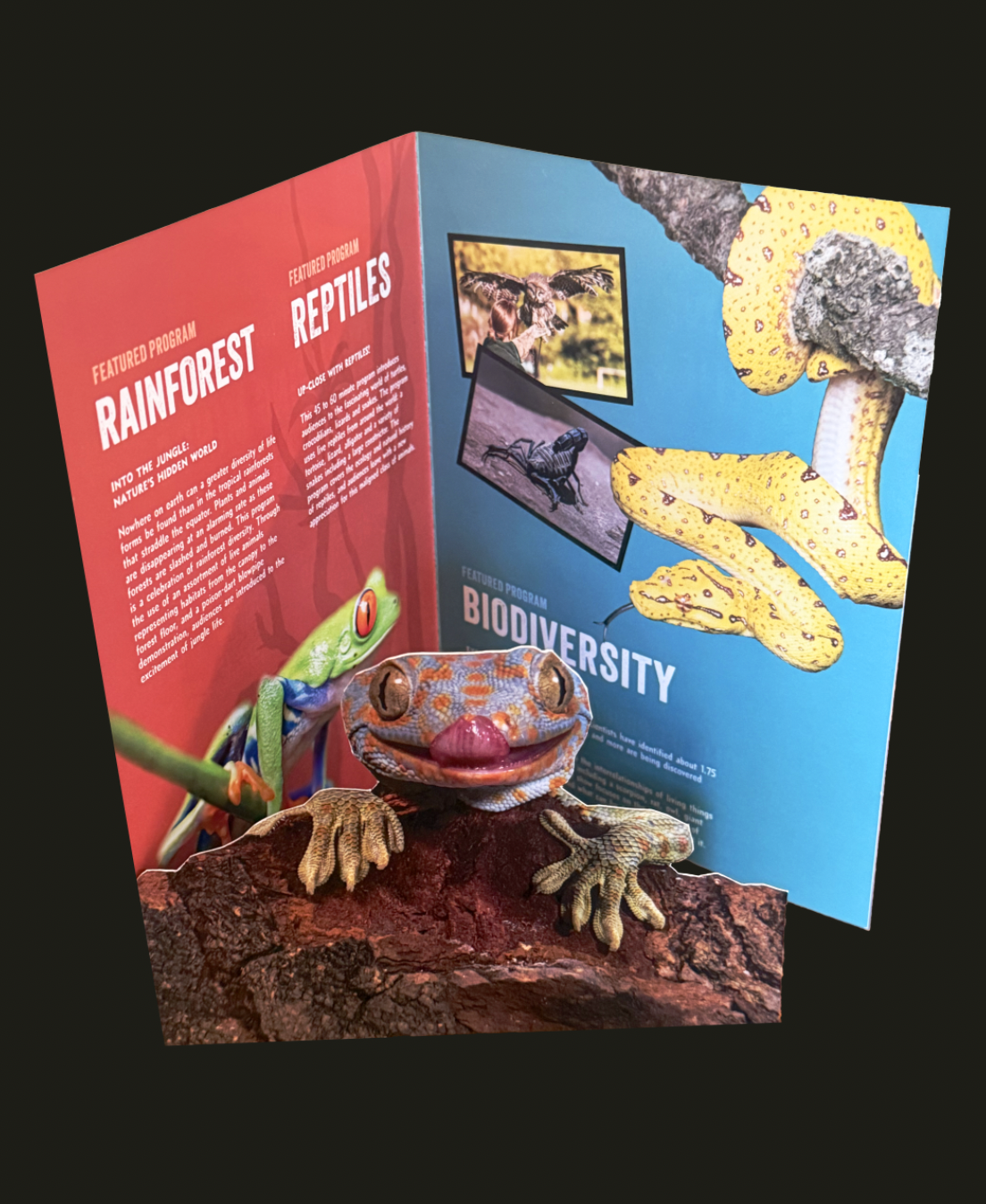
Moving on, working on the deliverables for the rebrand took a lot of time as I planned to heavily study what other zoo brands design to be so successful in that field. I focused mainly on a well-designed color palette to shape my rebrand to really pull everything together throughout my project. Some setbacks in my project were figuring out how to achieve a brochure that didn’t feel like it lacked excitement. I decided to test out a new method of die-cutting the front to make the image pop out and be more interesting. Another setback was making sure the signage boards were more interactable with viewers by adding a lot of infomation while keeping it clean and on brand. The overall goal for my project was to bring a clean, new polished look for a childhood place I’ve enjoyed as they lacked brand. By studying and observing what other professional zoos did for their branding helped me build my own ideas to make Reptiland stick out more while respecting it’s conservation efforts and educational background.
Process Work:
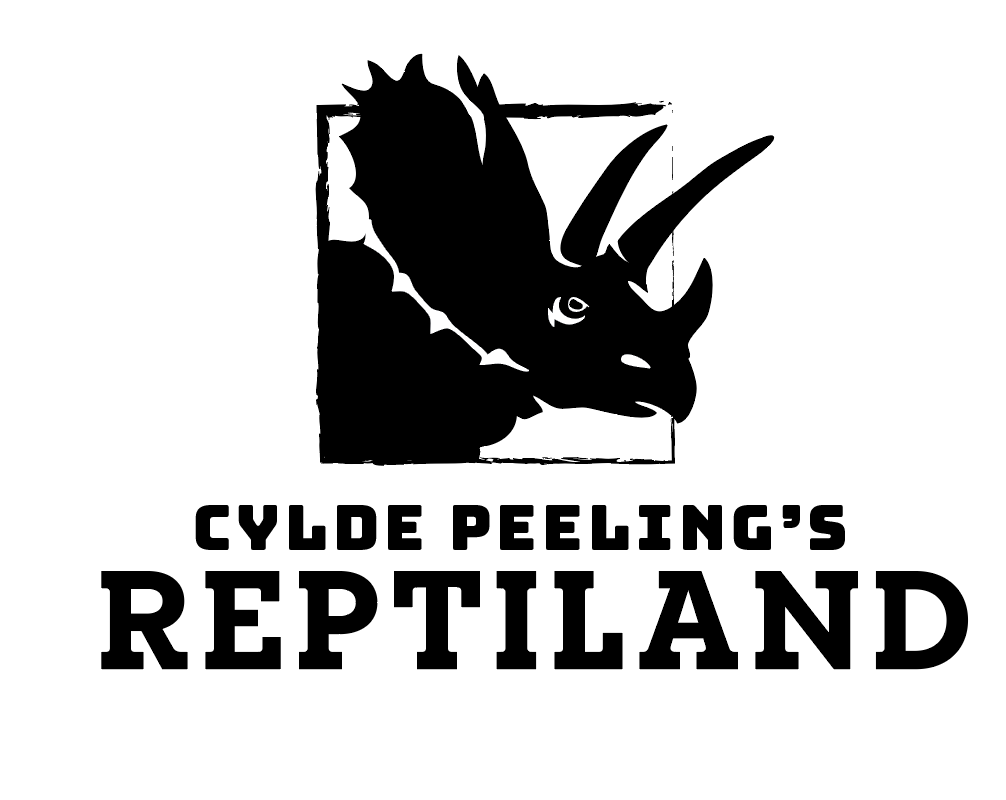
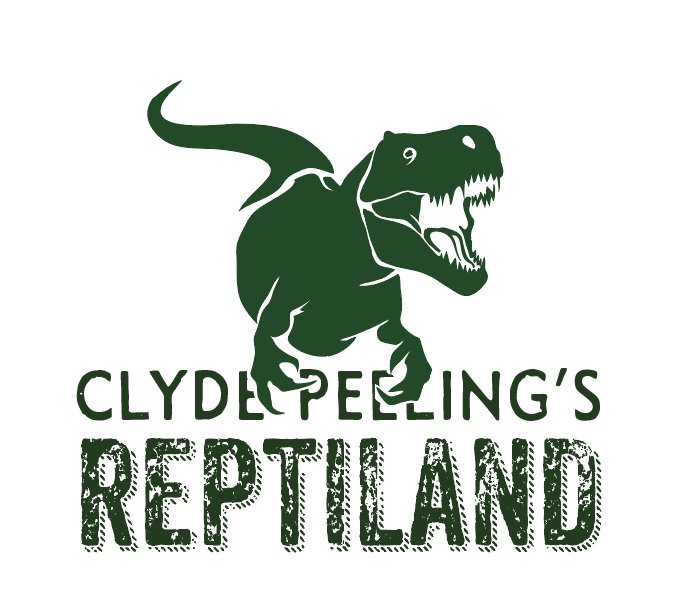
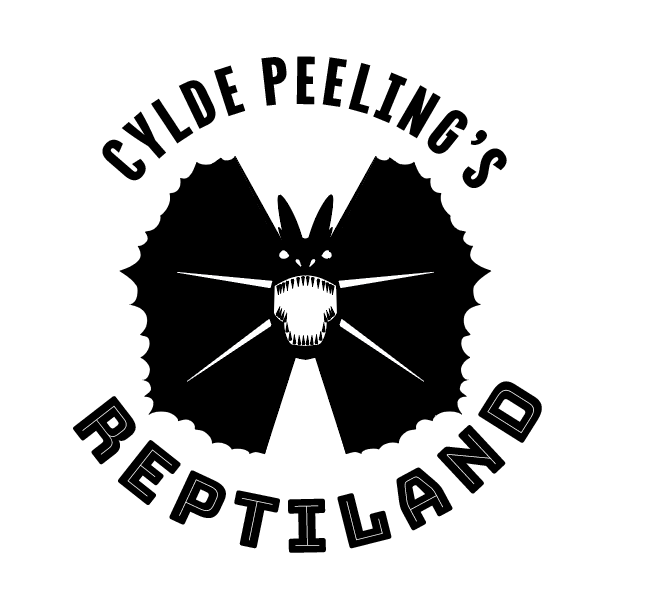
The beginning work of this project included different directions to go with, featuring different logo designs. All logos began on paper and were transferred to Adobe Illustrator. This approach helped me with shape, symbolism, and composition before thinking about color or detail. This also helped with rapidly testing different layouts, icons, and typography treatments.
Primary Logo & Brand Guidelines:
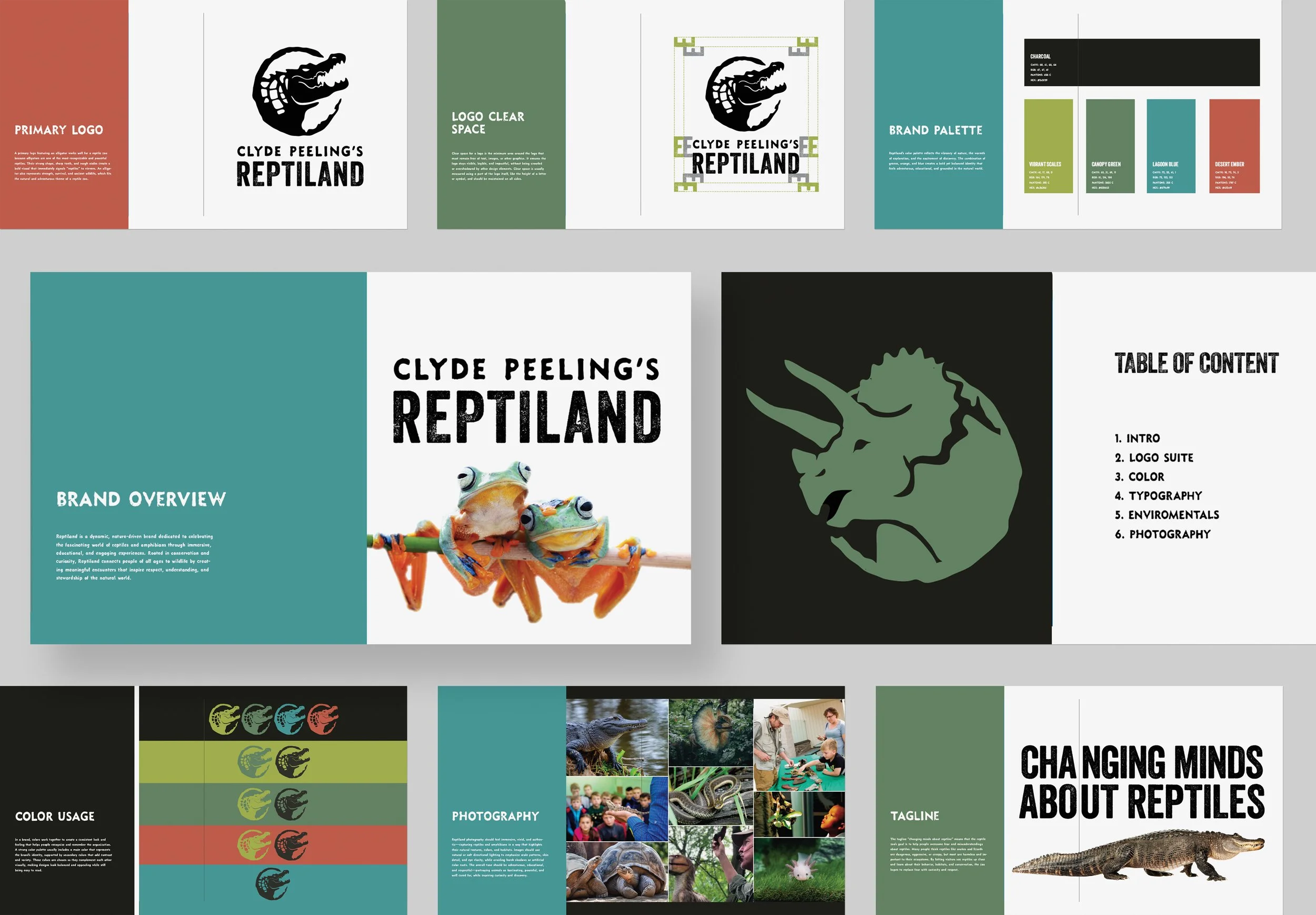
The reimagined brand for Clyde Peeling’s Reptiland introduces a bold, modern identity that reflects both its legacy and its future as a leader in reptile education and conservation. Guided by new brand standards, the visual system centers on a refined logo that uses clean, organic forms inspired by reptile movement and natural patterns—symbolizing adaptability, resilience, and the beauty of often-misunderstood species.
The updated color palette draws from earthy greens, warm neutrals, and vibrant accent tones, evoking the diverse habitats Reptiland represents while maintaining a welcoming, family-friendly feel. Typography is contemporary and highly legible, balancing professionalism with approachability to engage both young visitors and lifelong learners.
Website:
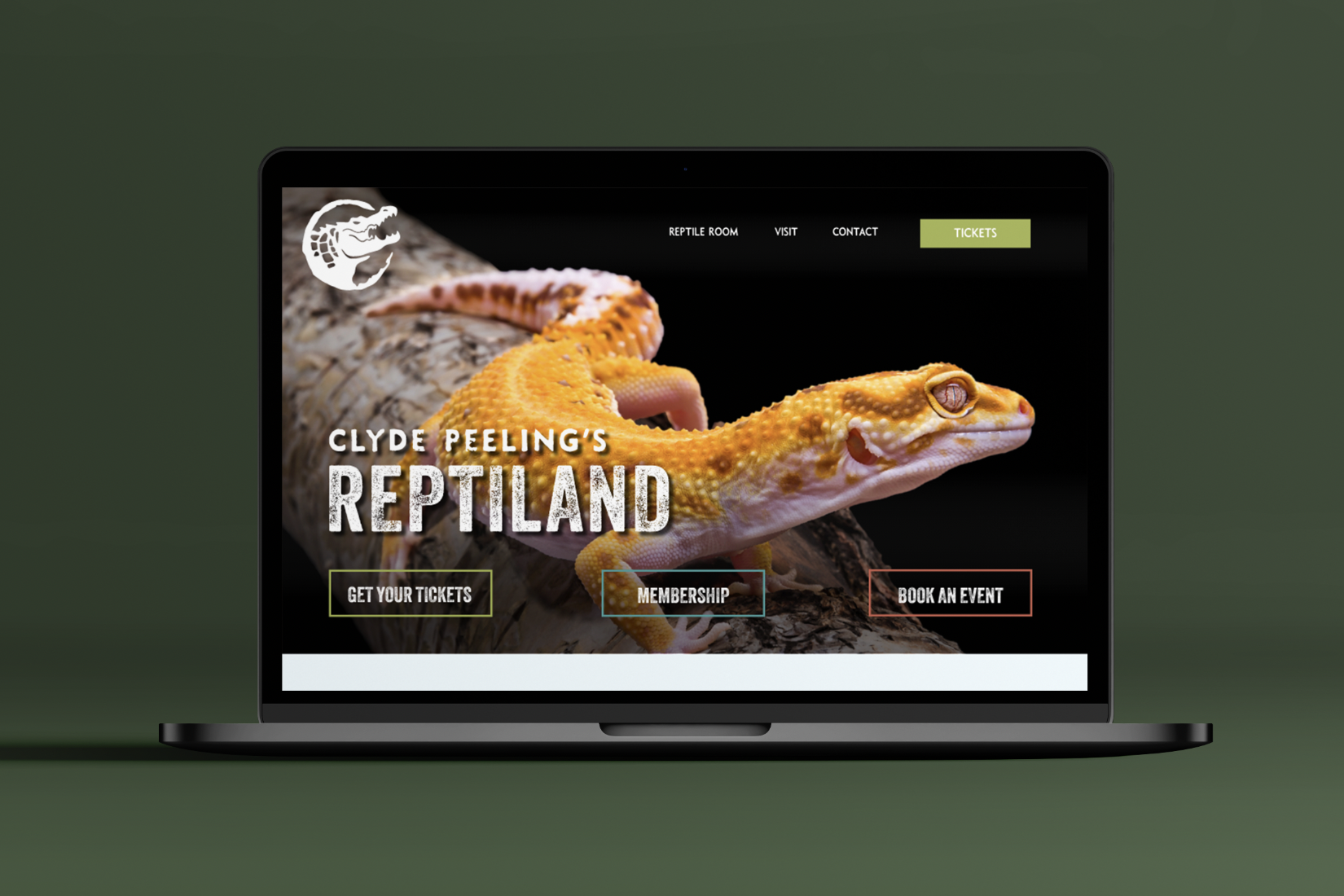
Welcome to a reimagined Reptiland—where discovery, adventure, and conservation come together in an immersive wildlife experience. The new website reflects the park’s updated brand, offering a vibrant, easy-to-navigate platform that brings visitors closer to the fascinating world of reptiles and amphibians.
Designed with both families and enthusiasts in mind, the site features bold visuals, engaging storytelling, and intuitive navigation that make planning a visit simple and exciting. Guests can explore interactive exhibits, learn about live shows, and get an up-close look at the animals through dynamic photography and educational content.
The updated digital experience also highlights Reptiland’s commitment to conservation and education, with dedicated sections that share the importance of protecting these often-misunderstood species. Clear calls-to-action—like ticket purchasing, event updates, and program registration—ensure users can seamlessly move from inspiration to action.
Signage Boards:
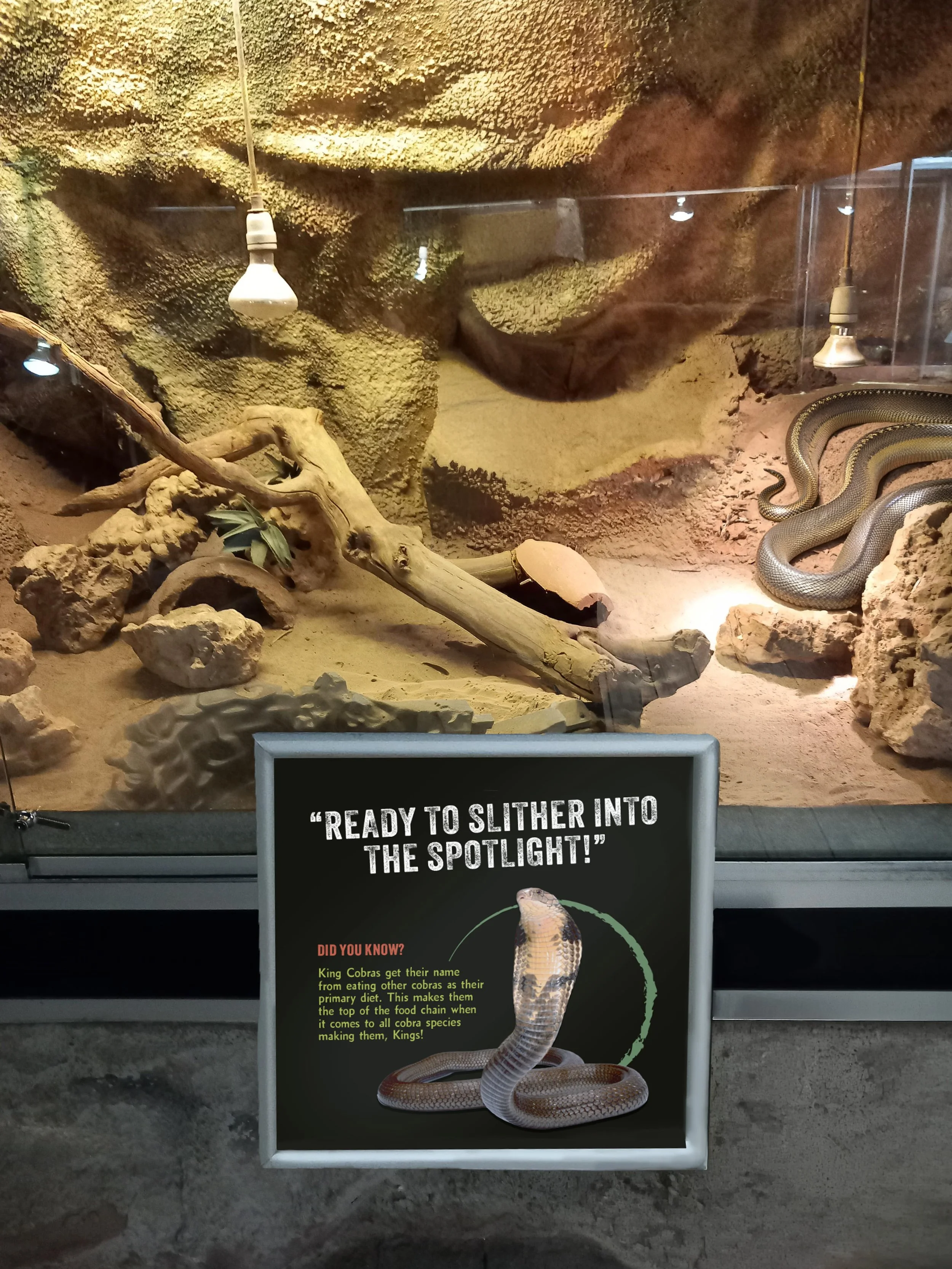
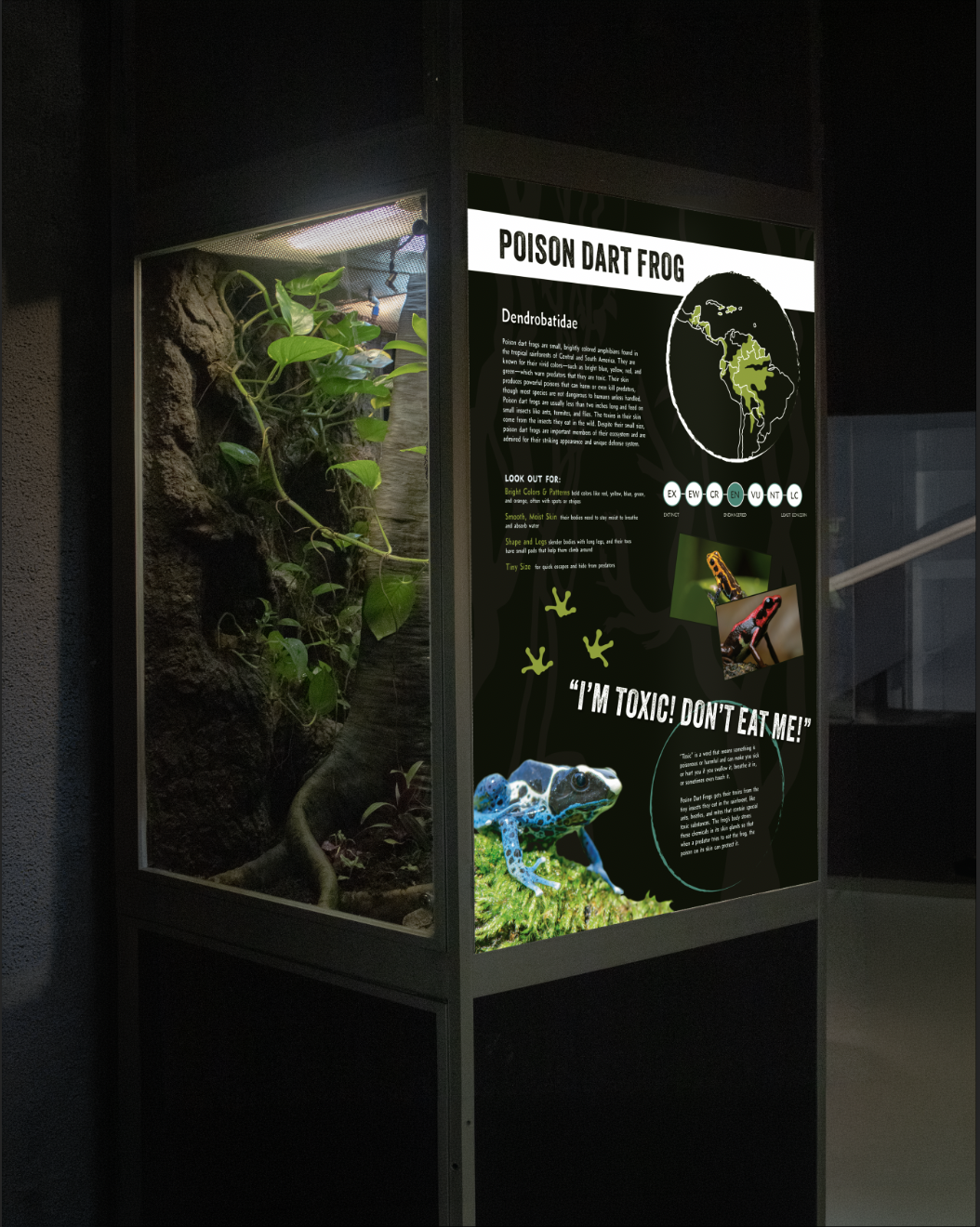
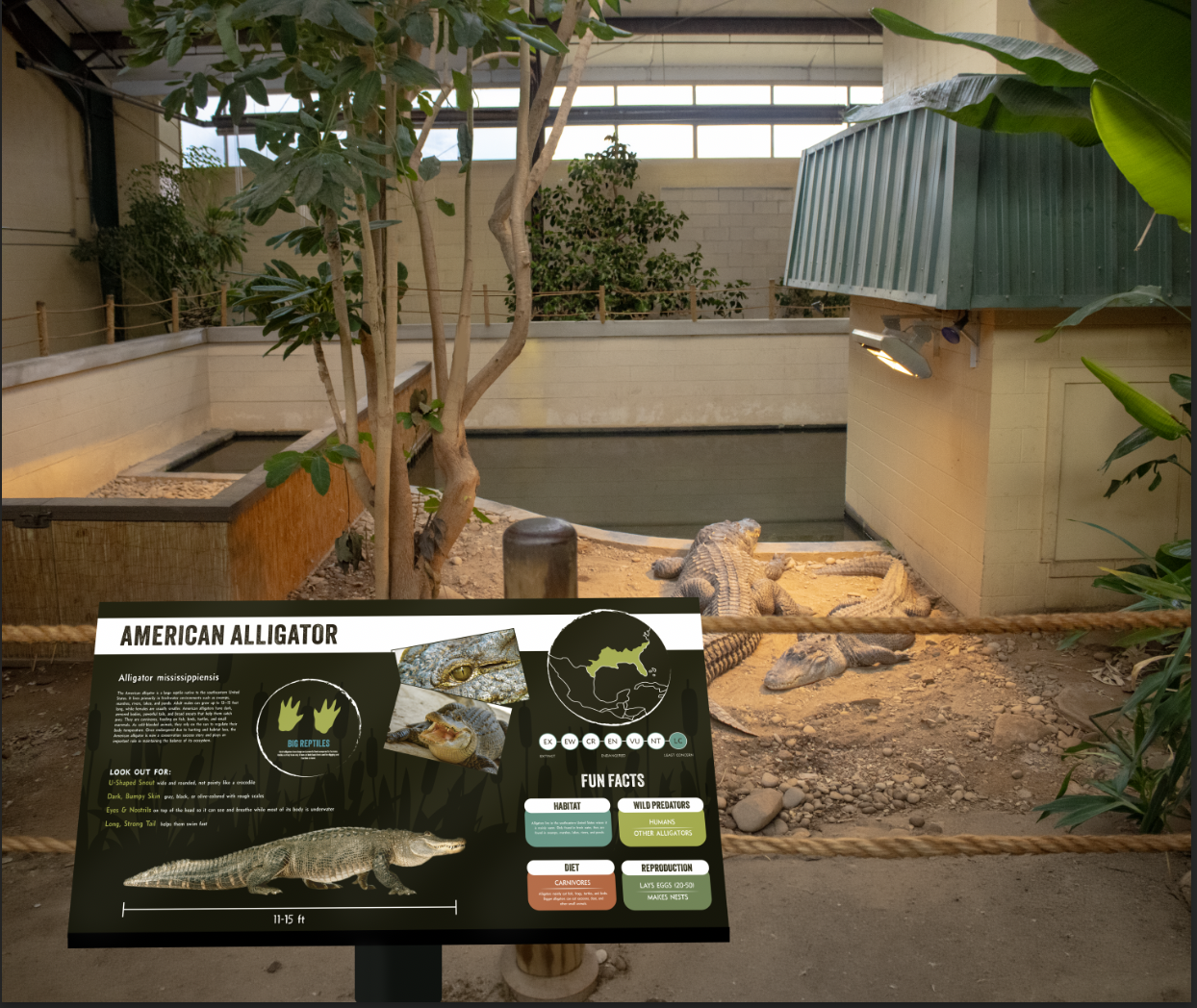
The signage system for Clyde Peeling's Reptiland brings each species to life through a cohesive yet dynamic design approach that blends education with visual impact. The alligator exhibit sign uses bold typography, high-contrast layouts, and textured, scale-inspired backgrounds to convey strength and ecological importance, guiding visitors through key facts about habitat and behavior. In contrast, the poison dart frog sign embraces vibrant colors and playful patterns inspired by its natural warning hues, creating an eye-catching, family-friendly experience with accessible, bite-sized information. Adding a layer of fun and interaction, the cobra sign highlights surprising facts through engaging, easy-to-read content, using flowing graphic elements that echo the shape of a cobra’s hood to draw attention and spark curiosity. Together, these designs create an immersive, visually unified system that encourages exploration, learning, and a deeper appreciation for reptiles and amphibians.
Enviromentals:
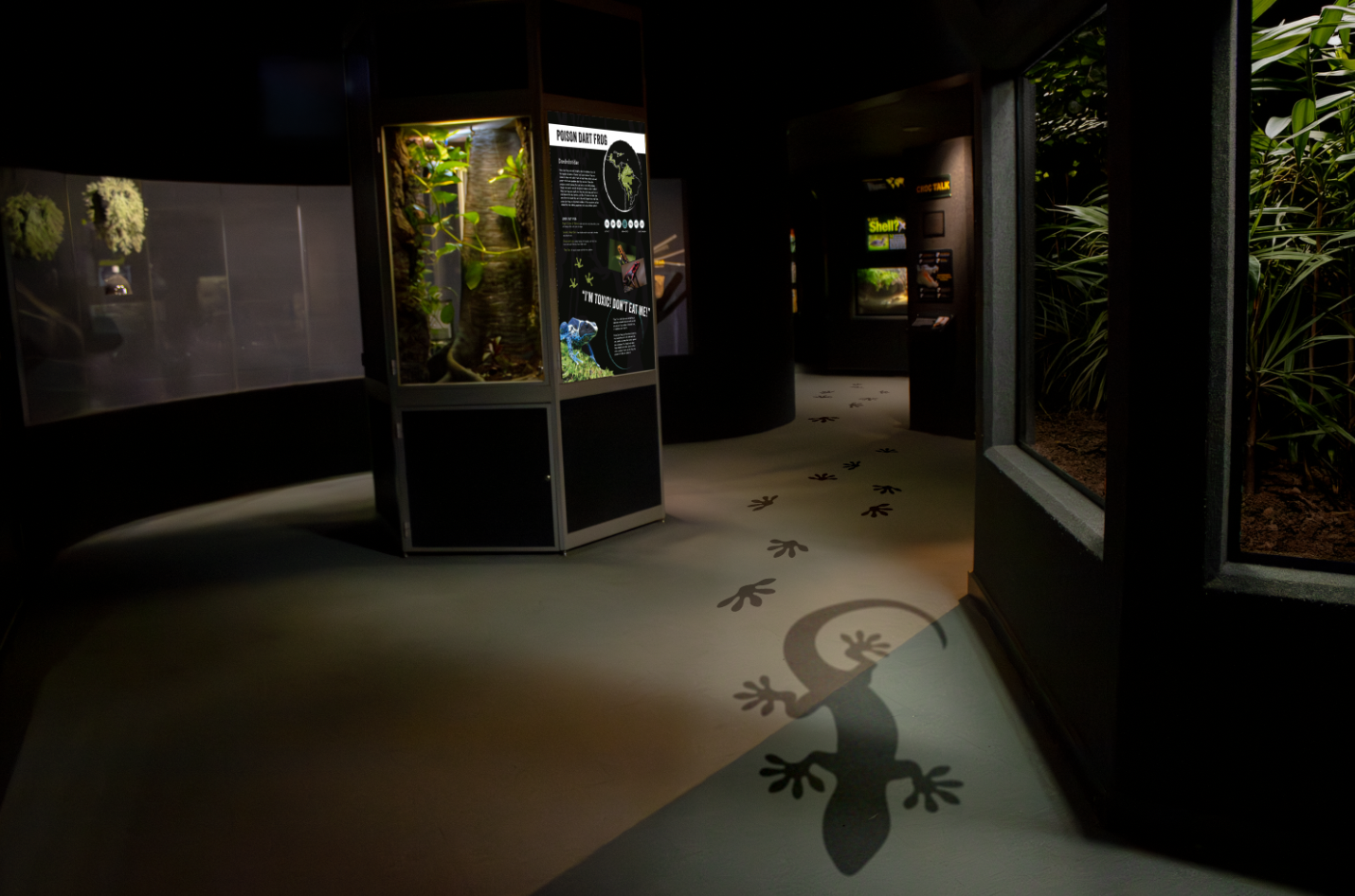
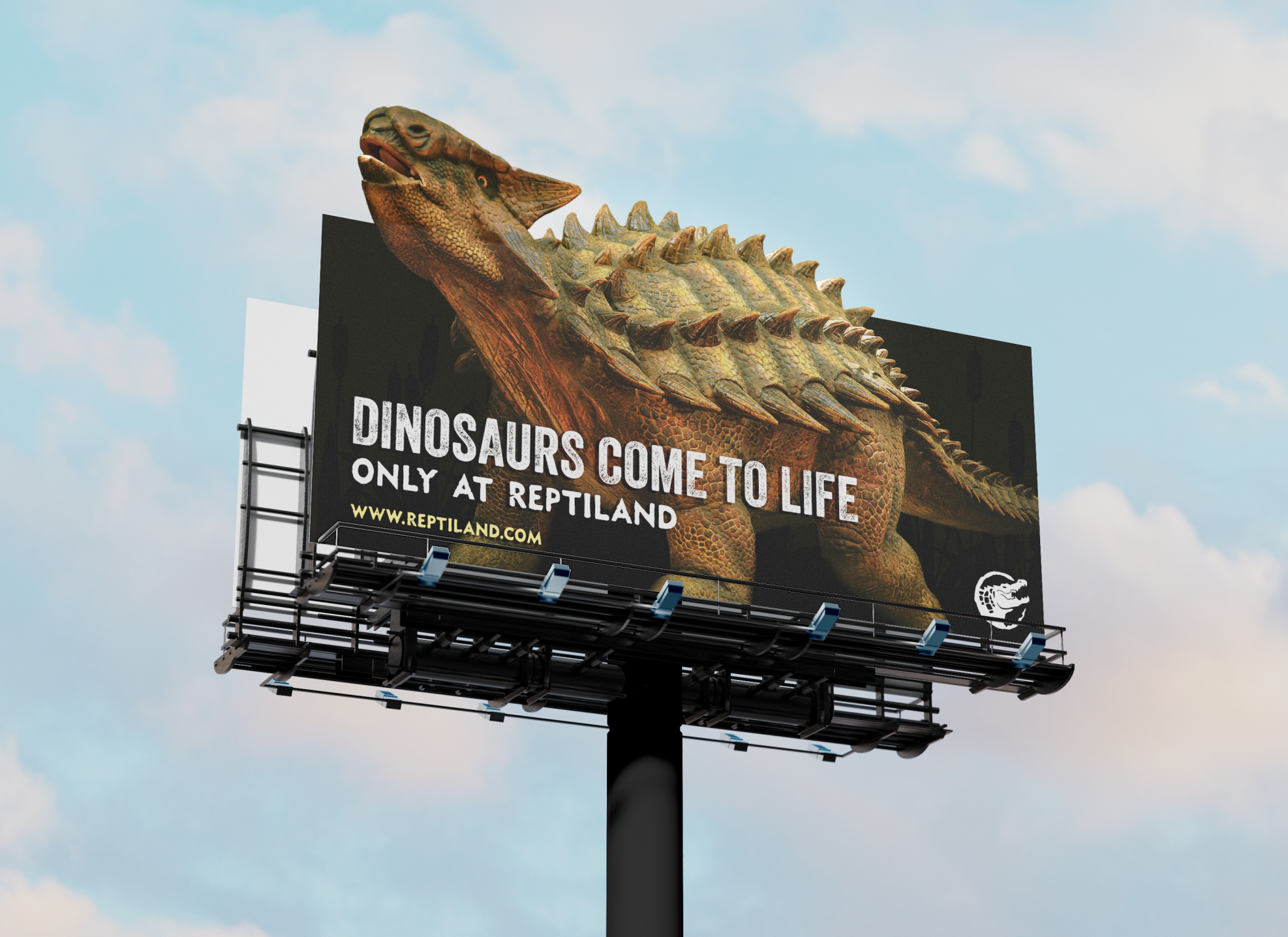
The environmental design for Clyde Peeling's Reptiland extends the brand beyond exhibits, transforming the space into a fully immersive journey. A bold dinosaur billboard acts as a striking visual anchor, connecting modern reptiles to their prehistoric ancestors through dramatic imagery, large-scale typography, and a sense of motion that captures attention from a distance. Complementing this, footprint-inspired carpeting weaves throughout the space, guiding visitors along pathways as if they’re tracking creatures through their habitats. These playful yet purposeful elements create a sense of exploration and continuity, reinforcing the connection between past and present while encouraging guests to engage with their surroundings in a more interactive and memorable way.
Exibit Posters:
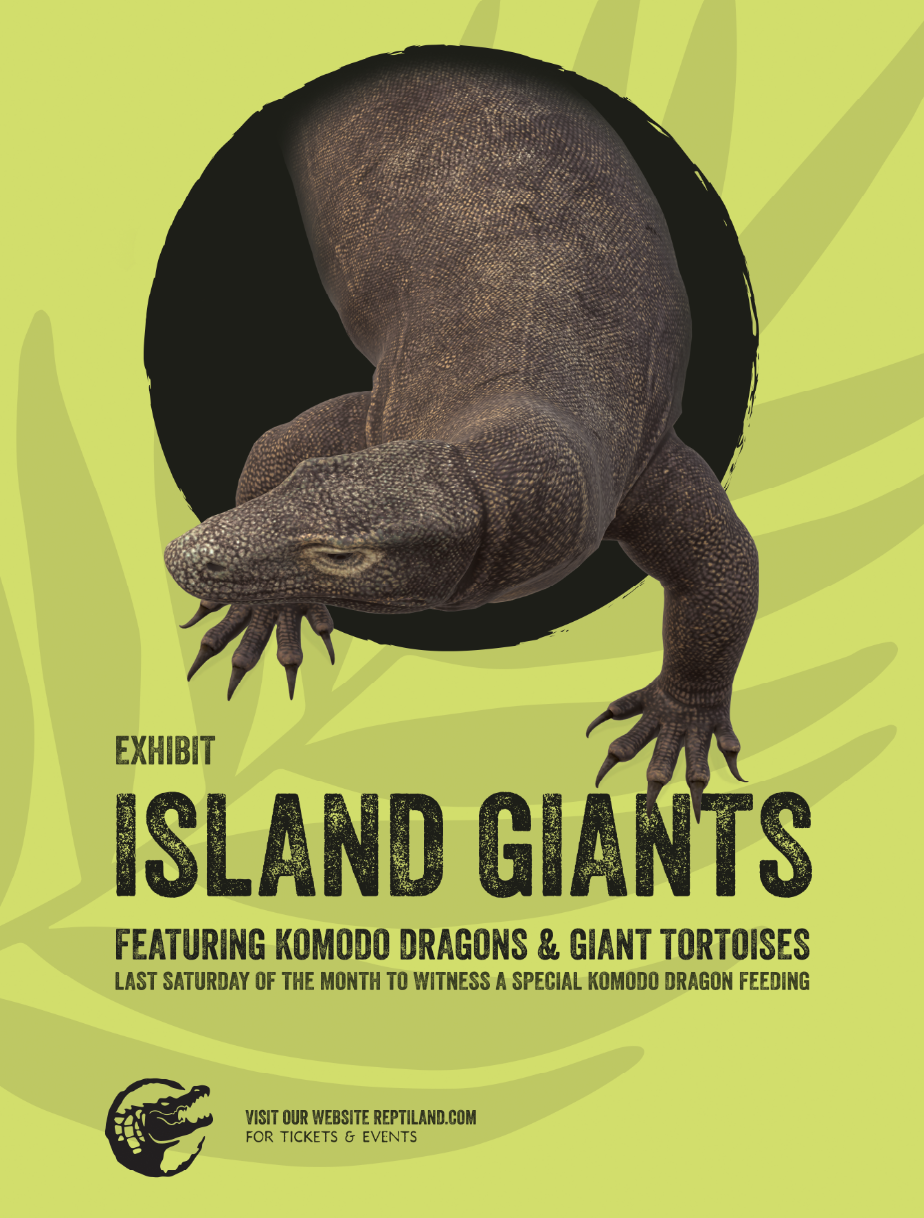
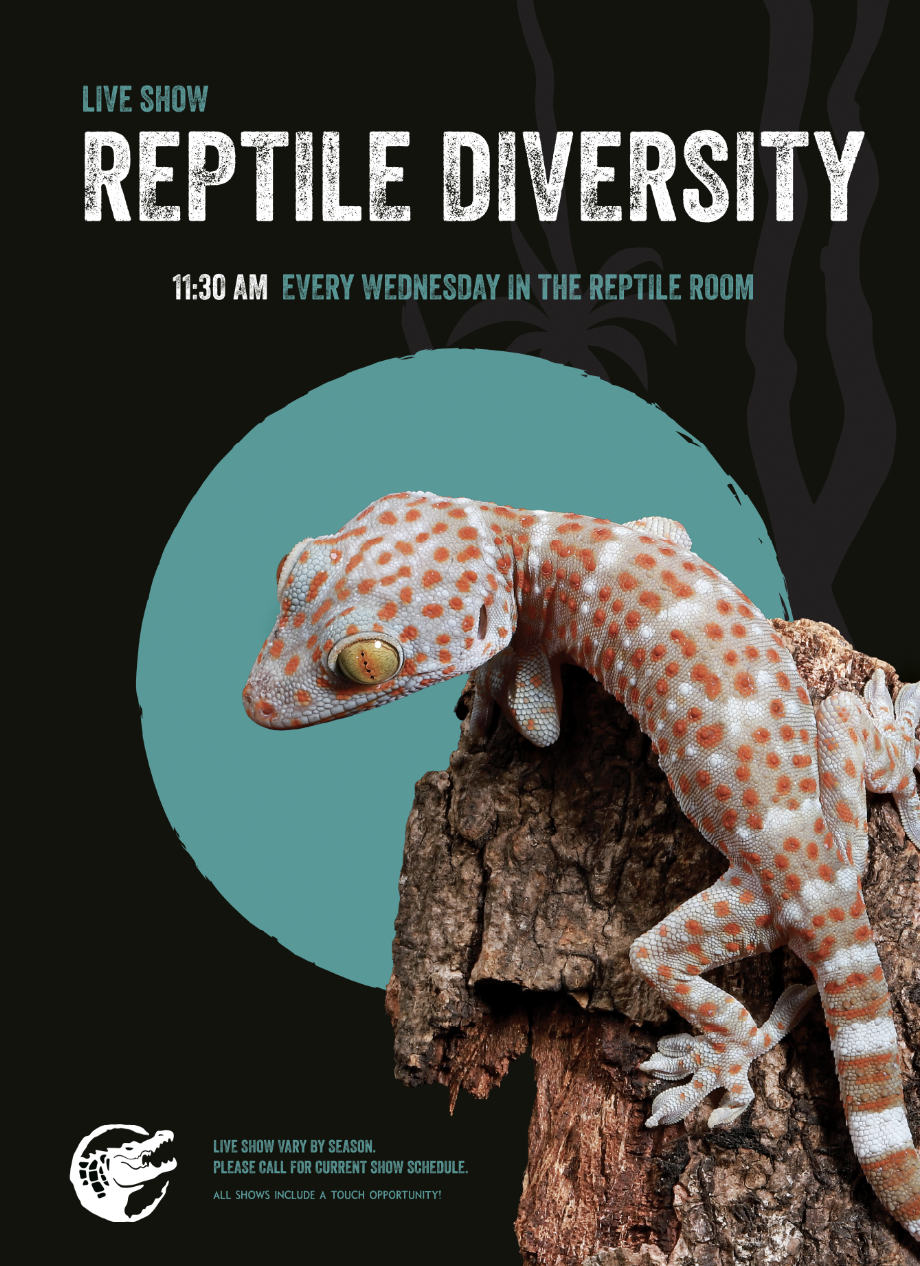
The exhibit poster series for Clyde Peeling's Reptiland combines bold storytelling with striking visuals to capture attention and deepen engagement. The Komodo dragon poster presents a powerful, dramatic composition, using high-contrast imagery and rugged, earthy textures to reflect the animal’s strength and dominance. Clean, modern typography highlights key facts and conservation messaging, while the overall layout emphasizes scale and intensity, drawing viewers into the world of one of the largest and most formidable reptiles on Earth. In contrast, the reptile room poster takes a more exploratory and inviting approach, featuring a collage of diverse species arranged within a cohesive grid or flowing layout. Vibrant accents, layered textures, and approachable messaging create a sense of discovery, encouraging visitors to step inside and experience the variety of reptiles up close. Together, the posters maintain a unified visual identity while adapting tone and composition to match the unique character of each exhibit.
Brochure:
The brochure for Clyde Peeling's Reptiland transforms information into an engaging, take-anywhere experience that captures the excitement of its wildlife outreach programs. Designed with a lively, travel-inspired aesthetic, the brochure highlights Reptiland’s exclusive “on the road” activities—bringing reptiles and amphibians beyond the park and directly into schools, events, and communities. Bold visuals, playful layouts, and map-like graphic elements guide readers through different program offerings, while dynamic photography showcases up-close animal encounters in action. The overall tone is adventurous and inviting, positioning Reptiland’s outreach as a unique way to experience wildlife anywhere—sparking curiosity and connection whether you’re visiting the park or bringing the experience to you.
Merch:
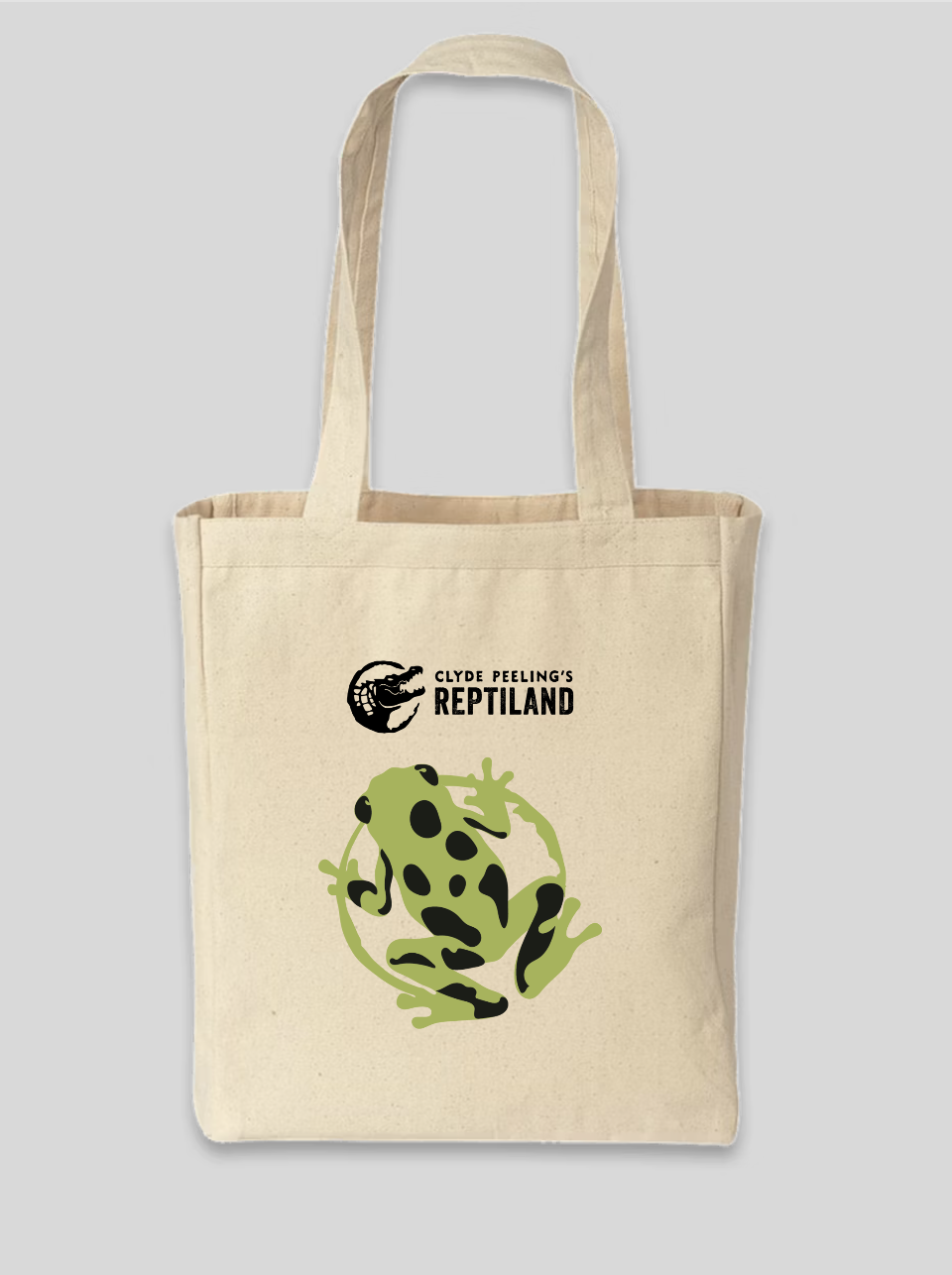
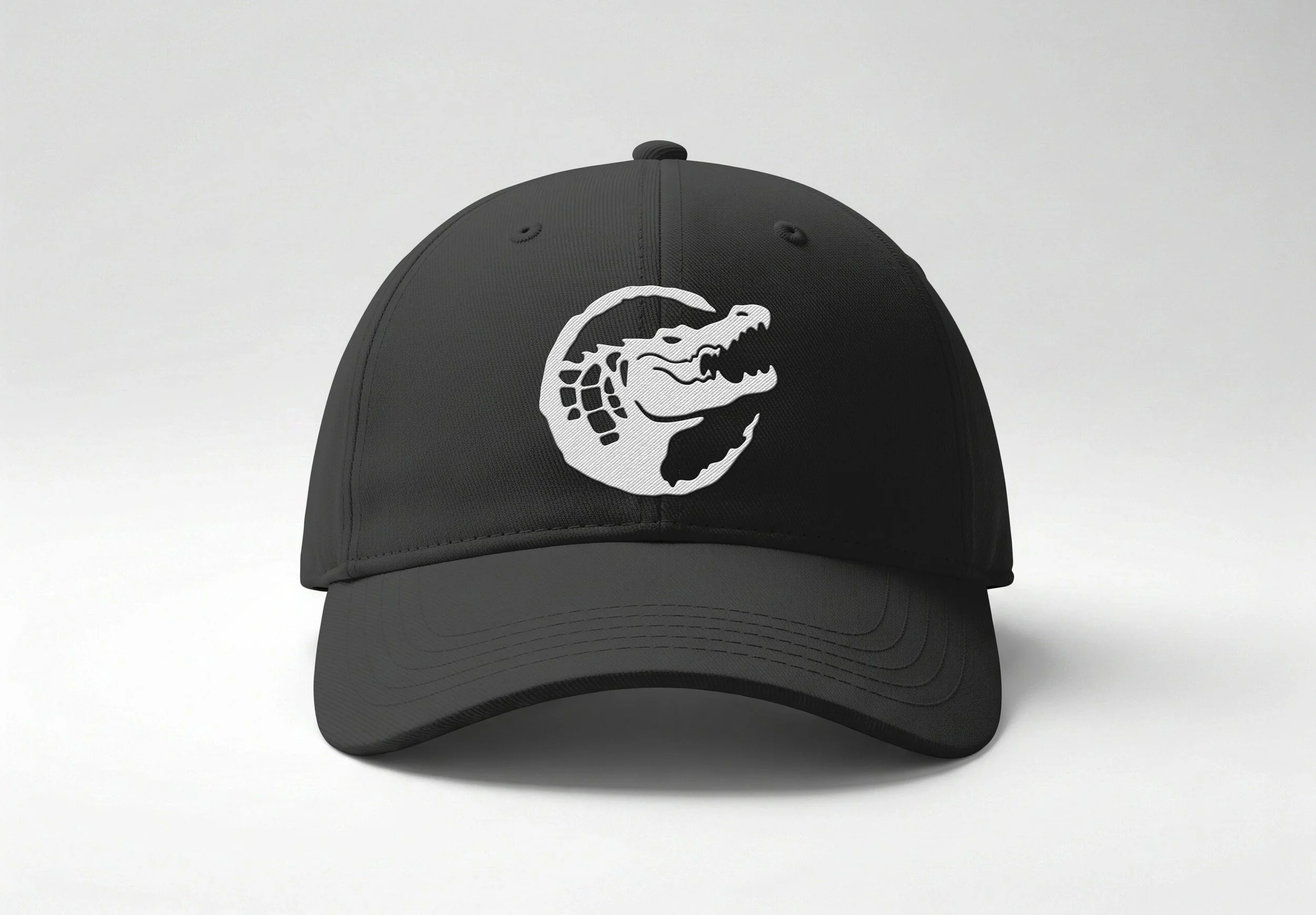
The merchandise line for Clyde Peeling's Reptiland extends the new brand identity into everyday, wearable pieces that are both stylish and memorable. The tote bag features a clean, modern design with the updated logo prominently displayed, complemented by subtle frog illustration.. Durable and eco-friendly, it reinforces the park’s commitment to conservation while serving as a functional keepsake for visitors. The hat takes a more minimal approach, using embroidered logo elements or a simplified icon for a sleek, versatile style. With earthy tones drawn from the brand palette, it offers a casual, wearable way for guests to connect with Reptiland beyond their visit. Together, these merchandise items blend practicality with strong visual identity, turning the brand into something visitors can carry with them long after they leave.
Sticker Designs: